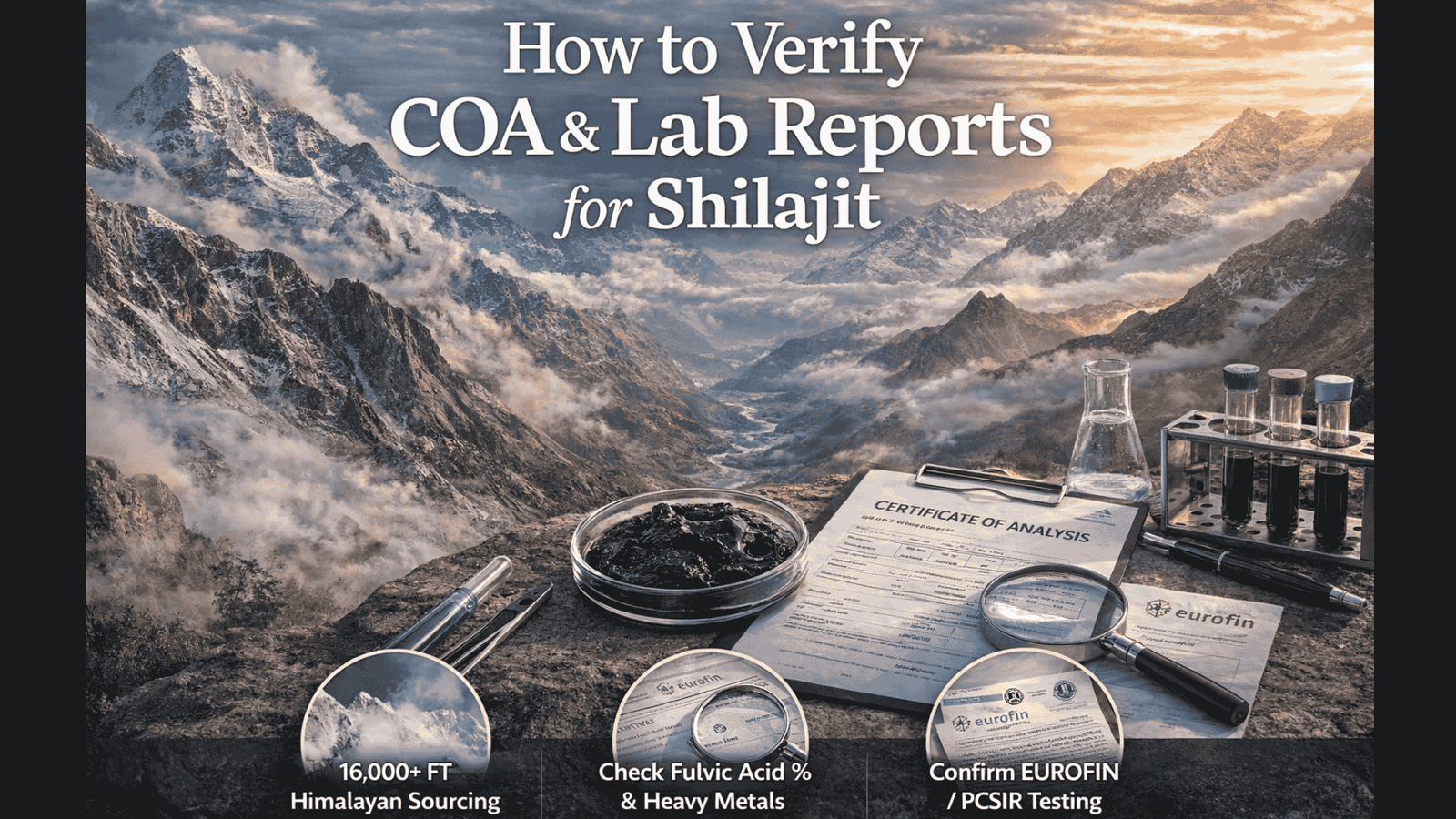
How to Verify COA & Lab Reports for Shilajit
A Complete Guide for Importers, Brands, and Bulk Buyers

The global demand for Pure Himalayan Shilajit is growing rapidly. Health brands, supplement companies, and natural product retailers across the world are searching for authentic Shilajit suppliers who can provide verified, lab-tested, export-grade material.
However, one major challenge exists in the Shilajit industry: fake or misleading lab reports.
Many suppliers claim to sell “pure Shilajit,” but without proper COA (Certificate of Analysis) verification, buyers cannot confirm the authenticity, safety, or quality of the product.
For wholesale buyers, private label brands, and importers, understanding how to verify COA and lab reports is essential before purchasing Shilajit in bulk.
This guide explains:
- What a Shilajit COA is
- How to read and verify lab reports
- Which tests prove authenticity
- How to detect fake certificates
- What importers should check before buying
- How trusted suppliers like Elasna Himalayan Shilajit ensure verified export-grade quality
What Is a COA (Certificate of Analysis) for Shilajit?
A Certificate of Analysis (COA) is a laboratory document that confirms the chemical composition, purity, and safetyof a product.
For Shilajit, a COA verifies that the resin:
- Contains natural fulvic acid and trace minerals
- Is free from harmful contaminants
- Meets international safety standards
- Is suitable for export and human consumption
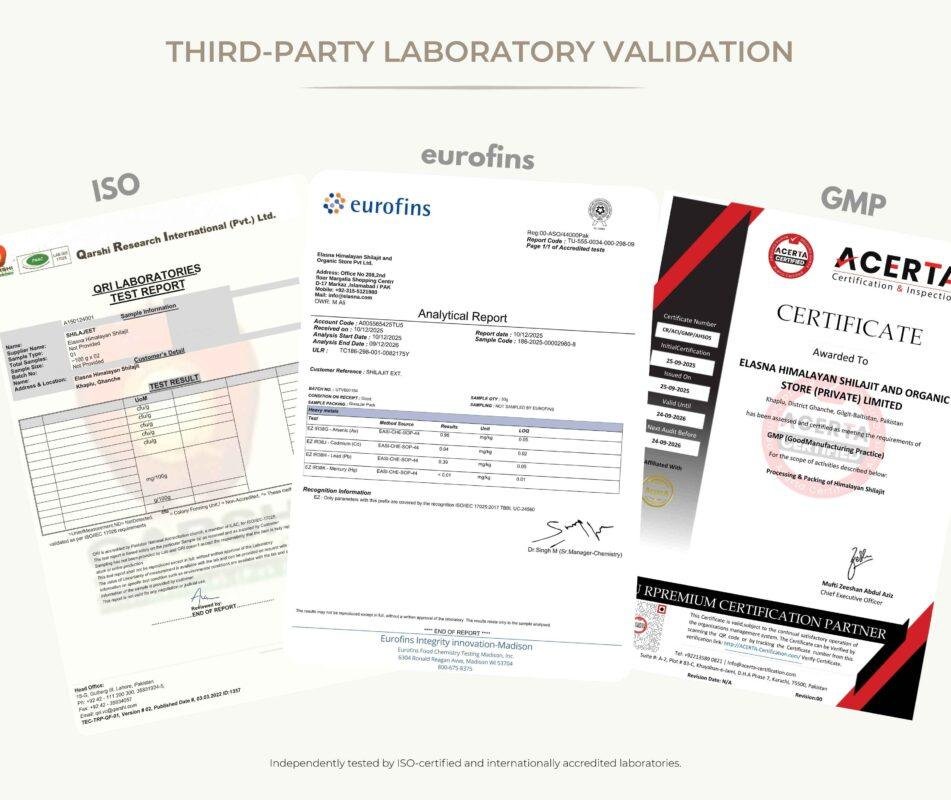
A legitimate COA is issued by a recognized testing laboratory such as:
- EUROFIN Laboratories
- PCSIR Laboratories
- ISO-accredited independent labs
- Government-certified analytical labs
Without a verified COA, buyers cannot confirm the authenticity of Shilajit.
For wholesale buyers and supplement brands, a COA is not optional—it is a mandatory requirement for import, compliance, and product registration.
Why COA Verification Is Critical for Shilajit Buyers
Shilajit is a natural mineral resin formed over centuries in high-altitude mountain regions.
Authentic material is rare and difficult to harvest, especially Gilgit-Baltistan Shilajit sourced from the Himalayas and Karakoram mountains at 16,000–18,000+ feet.
Because of this rarity, the market is filled with:
- Synthetic substitutes
- Low-grade asphalt-like material
- Diluted or adulterated products
A verified lab report ensures that buyers are purchasing real Himalayan Shilajit, not imitation products.
For businesses importing or selling Shilajit, COA verification protects against:
- Regulatory rejection
- Import shipment delays
- Product recalls
- Brand reputation damage
This is why serious B2B buyers only work with suppliers providing third-party verified lab testing.
Key Sections of a Shilajit Lab Report
A professional COA contains multiple sections that evaluate the product’s composition and safety.
Understanding these sections allows buyers to quickly determine product quality.
1. Fulvic Acid Content
Fulvic acid is the primary active compound in Shilajit.
High-quality Gold Grade Shilajit typically contains:
- 60%–80% fulvic acid
Lower percentages often indicate dilution or poor-quality raw material.
When reviewing a COA, check:
- Fulvic acid percentage
- Test method used
- Lab accreditation
Authentic Himalayan Shilajit from high altitudes generally shows naturally high fulvic acid levels.
2. Mineral Profile
Authentic Shilajit contains trace minerals formed through geological processes over centuries.
Common minerals include:
- Iron
- Magnesium
- Potassium
- Zinc
- Copper
- Selenium
A full mineral profile confirms the natural origin of the material.
If a lab report shows very few minerals, it may indicate processed or synthetic material.
3. Heavy Metal Testing
Heavy metal testing is essential for safety and international compliance.
A legitimate COA should include testing for:
- Lead (Pb)
- Mercury (Hg)
- Arsenic (As)
- Cadmium (Cd)
Results must fall below international safety limits.
Export-grade Shilajit undergoes advanced purification and heavy metal removal, ensuring safe levels for human consumption.
4. Microbiological Testing
Microbial testing ensures the product is free from harmful bacteria.
Typical microbiological tests include:
- Total plate count
- Yeast & mold
- Salmonella
- E. coli
High-quality suppliers ensure clean and safe processing environments to meet international food safety standards.
5. Moisture Content
Shilajit resin naturally contains moisture.
However, excessive moisture can lead to:
- Mold growth
- Product degradation
- Reduced shelf life
A COA should confirm safe moisture levels consistent with purified resin.
How to Detect Fake Shilajit Lab Reports
Unfortunately, fake COAs are common in the Shilajit market.
Buyers should carefully verify lab documents before trusting them.
Here are the most common warning signs.
Missing Laboratory Information
A legitimate COA must include:
- Laboratory name
- Address
- Accreditation details
- Contact information
If this information is missing, the report may be fake.
No Batch Number
Authentic COAs are batch-specific.
If a supplier sends a generic lab report without a matching batch number, it cannot verify the actual product being sold.
No Testing Method
Professional labs include the analytical method used.
Examples include:
- HPLC testing
- ICP-MS analysis
Reports without testing methods should be treated cautiously.
Suspiciously Perfect Results
Natural Shilajit varies from batch to batch.
If every result looks identical or “perfect,” the report may be fabricated or copied.
Outdated Reports
Some suppliers reuse old COAs.
Always check the test date.
A legitimate supplier performs regular testing for each production batch.
Third-Party Labs That Add Trust
Independent laboratory testing adds credibility to Shilajit products.
Well-known labs used by reputable suppliers include:
- EUROFIN Laboratories
- PCSIR (Pakistan Council of Scientific and Industrial Research)
- ISO-accredited testing facilities
These labs perform advanced analytical testing that confirms purity, safety, and composition.
Processing Methods That Impact Lab Results
Shilajit purity depends heavily on how it is processed.
High-quality suppliers use traditional and modern purification techniques.
Sun Drying
Raw Shilajit collected from Himalayan rocks is naturally sun-dried to remove excess moisture.
This preserves its natural mineral composition.
Nano Filtration
Advanced filtration removes impurities while preserving the bioactive compounds of Shilajit.
Nano filtration helps produce clean, concentrated resin.
Heavy Metal Removal
Responsible manufacturers use purification techniques that reduce heavy metals while maintaining the natural mineral profile.
This process ensures export-grade safety standards.
Certifications That Support Shilajit Quality
Beyond lab reports, serious suppliers maintain international certifications.
Important certifications include:
GMP (Good Manufacturing Practices)
Ensures the product is manufactured in controlled and hygienic facilities.
ISO Certification
Confirms quality management systems and operational consistency.
PCSIR Certification
Validates testing conducted by a recognized scientific institution.
Third-Party Lab Testing (EUROFIN)
Provides internationally recognized verification of product composition and safety.
Together, these certifications demonstrate professional manufacturing and compliance.
Formats of Shilajit Available for Wholesale Buyers
Bulk buyers and supplement brands typically purchase Shilajit in several formats.
Shilajit Resin
The most traditional and premium format.
Often marketed as Gold Grade Shilajit.
Shilajit Powder
Used for:
- Capsules
- Tablets
- Functional foods
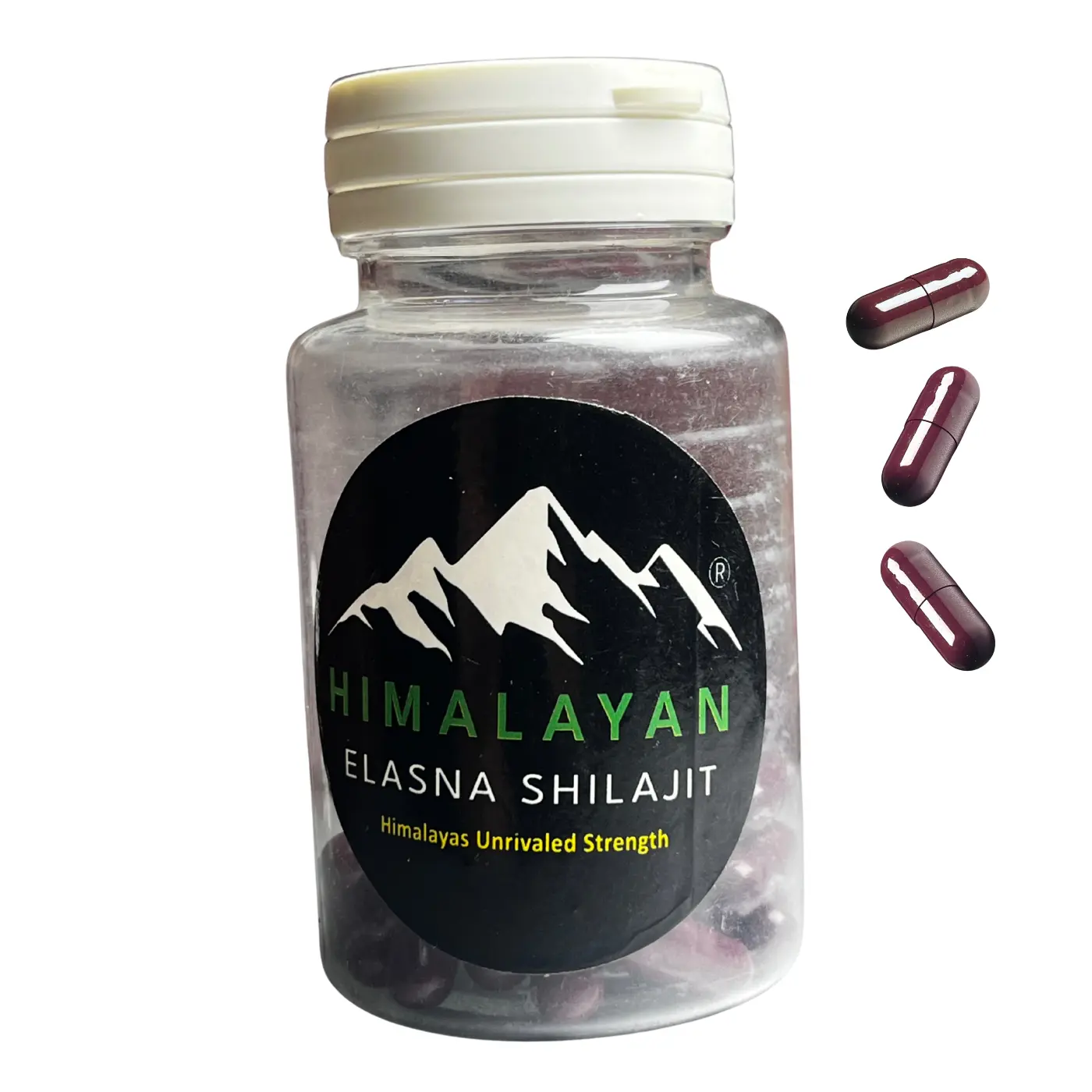
Shilajit Capsules
Ready-to-sell format for supplement brands.
Shilajit Liquid Extract
Used in tinctures and liquid supplements.
Real-World Use Cases for Shilajit Buyers
Shilajit is commonly used in:
- Nutritional supplements
- Herbal wellness products
- Energy blends
- Ayurvedic formulations
- Functional beverages
Global demand continues growing as brands introduce natural mineral-based supplements.
For these businesses, sourcing authentic Shilajit with verified COA documentation is essential.
Why Importers Prefer Himalayan Shilajit from Gilgit-Baltistan
One of the most respected sources of Shilajit is Gilgit-Baltistan, located within the Himalayas and Karakoram mountain ranges.
This region is known for:
- Extreme altitude (16,000–18,000+ feet)
- Minimal environmental pollution
- Traditional harvesting knowledge
Because of these conditions, the region produces high-grade mineral resin widely sought by international buyers.
Elasna Himalayan Shilajit — Trusted Wholesale Supplier
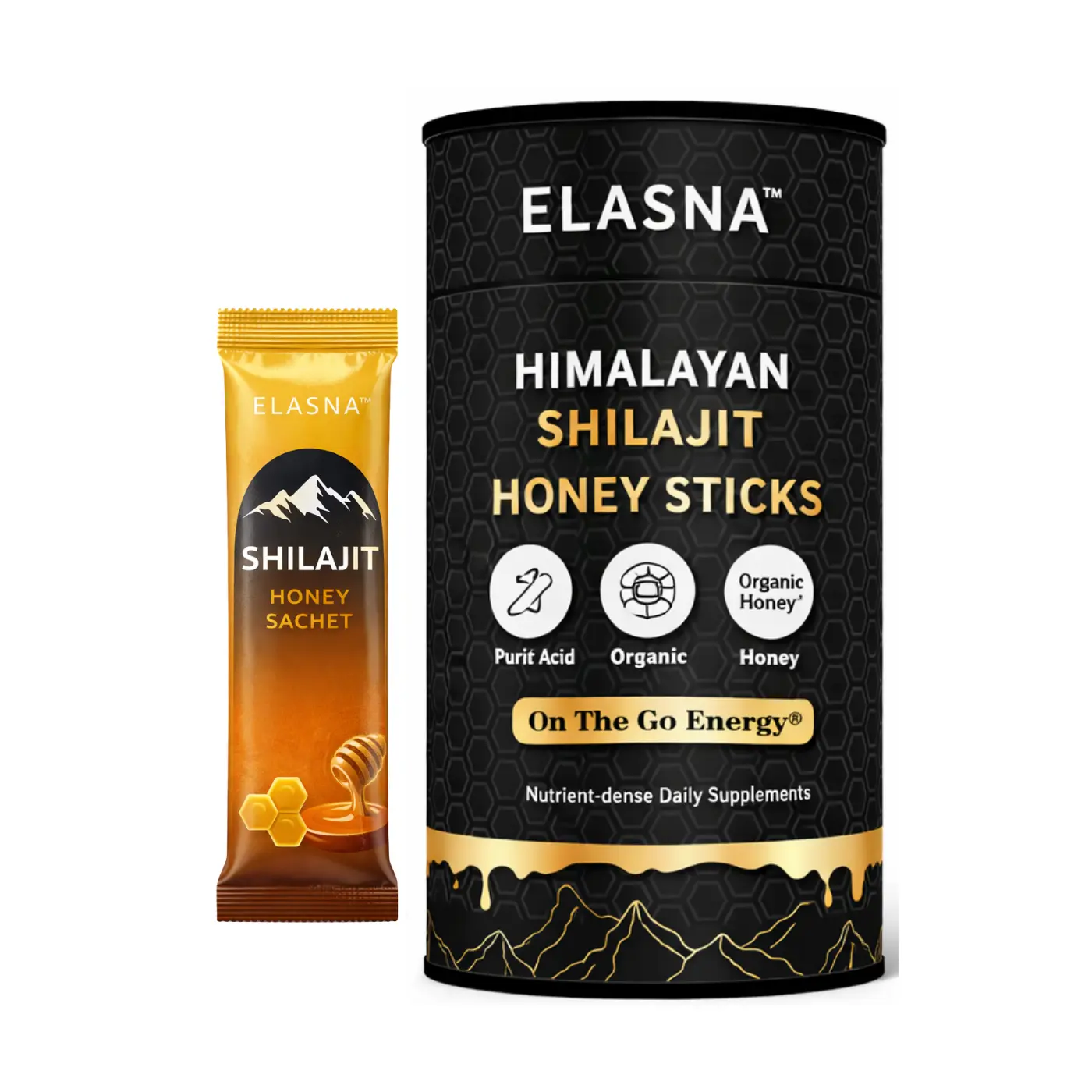
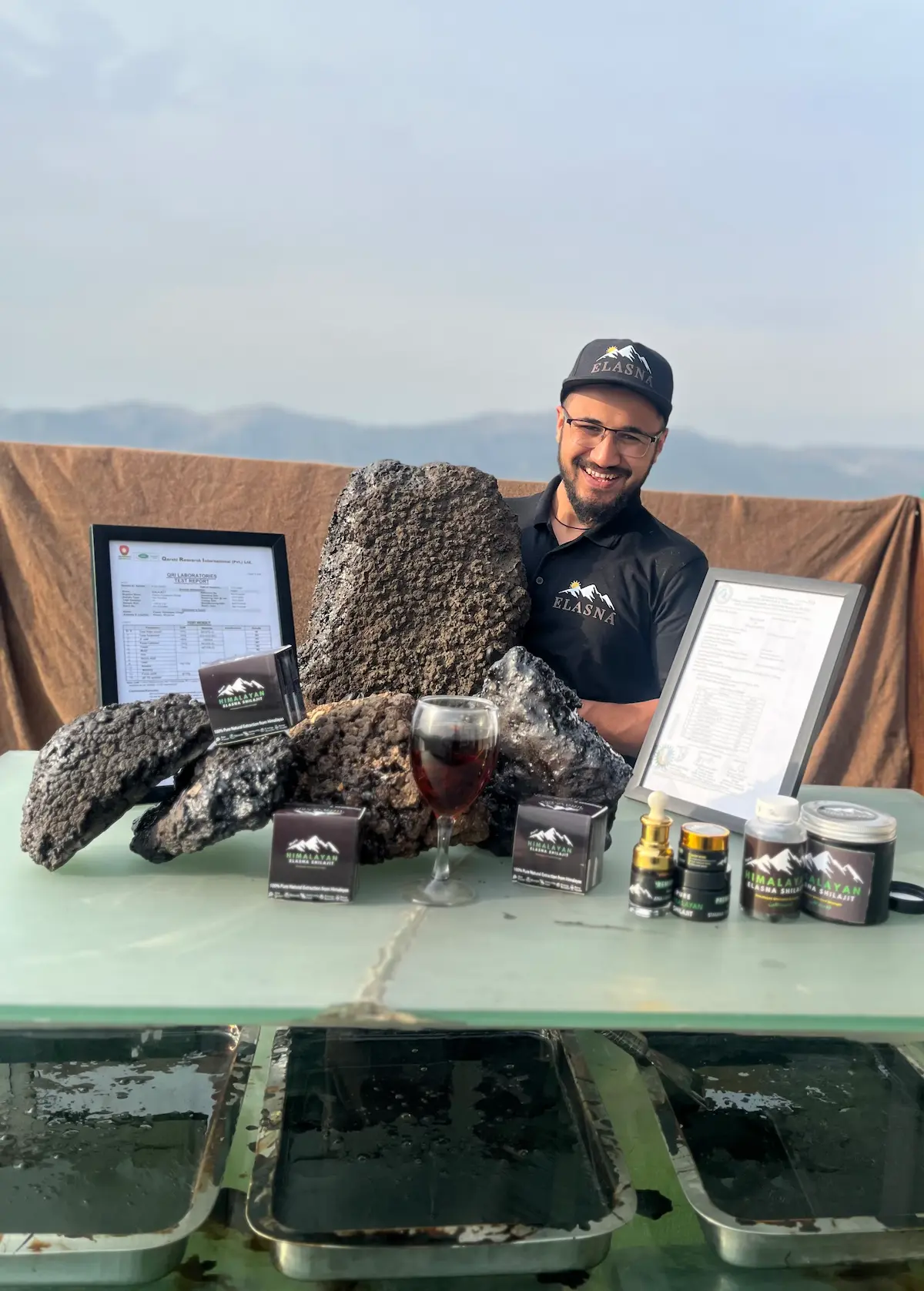
For brands and distributors seeking a reliable source, Elasna Himalayan Shilajit has built a reputation as a trusted supplier.
Elasna sources Pure Himalayan Shilajit directly from Gilgit-Baltistan, harvested from remote mountain regions at 16,000–18,000+ feet.
With 13 years of experience, the company supplies authentic Shilajit to more than 15 countries worldwide.
What Elasna Offers
- Pure Himalayan Shilajit
- Gold Grade Shilajit resin
- Gilgit-Baltistan Shilajit sourcing
- Export-grade purification
- Third-party lab testing
- OEM Shilajit manufacturing
- White Label Shilajit production
- Custom branding services
- Low MOQ for startups
- Competitive wholesale pricing
The company supports both B2B and B2C supply models.
Businesses can order bulk Shilajit or launch private label Shilajit products with custom packaging.
OEM & Private Label Shilajit Manufacturing
For supplement brands and distributors, OEM Shilajit manufacturing simplifies product development.
Services typically include:
- Custom packaging
- Capsule manufacturing
- Label design
- Regulatory documentation
- Batch testing
White label solutions allow brands to launch Shilajit products quickly with minimal investment.
Worldwide Export & Logistics
Reliable suppliers provide DDP worldwide shipping, simplifying international logistics.
This means the supplier manages:
- Export documentation
- Customs clearance
- International delivery
For importers, this reduces the complexity of sourcing bulk Shilajit internationally.
Checklist for Verifying Shilajit COA Before Buying
Before purchasing Shilajit, buyers should confirm the following:
✔ Third-party lab testing
✔ Fulvic acid percentage
✔ Heavy metal testing results
✔ Microbial safety tests
✔ Batch number verification
✔ Certification documents (GMP, ISO)
✔ Recent testing dates
✔ Supplier transparency
Using this checklist helps buyers avoid counterfeit or low-grade products.
Frequently Asked Questions (FAQs)
How can I verify if a Shilajit COA is real?
Check the laboratory accreditation, batch number, test date, and contact the laboratory if necessary to confirm the report.
What fulvic acid percentage indicates high-quality Shilajit?
Authentic Gold Grade Himalayan Shilajit often contains 60–80% fulvic acid, depending on the batch and testing method.
Why do Shilajit lab reports vary between batches?
Because Shilajit is a natural substance, mineral composition can vary slightly depending on harvesting conditions.
What certifications should a Shilajit supplier have?
Look for:
- GMP certification
- ISO certification
- Third-party lab reports
- PCSIR or government laboratory testing
Can I buy Shilajit in bulk for my own brand?
Yes. Many suppliers offer OEM and white label Shilajit manufacturing, allowing businesses to launch private label products.
Final Thoughts
In the rapidly expanding global Shilajit market, COA and lab report verification are essential for ensuring authenticity and safety.
For importers, supplement brands, and distributors, understanding how to read and verify these documents protects both consumer health and brand credibility.
Choosing a reliable supplier with transparent testing, certifications, and proven sourcing is the key to building a successful Shilajit business.
Buy Authentic Himalayan Shilajit — Contact Elasna
If you are looking for a trusted wholesale Shilajit supplier, Elasna provides export-grade Pure Himalayan Shilajit sourced directly from Gilgit-Baltistan.
Whether you need bulk Shilajit, OEM manufacturing, or private label solutions, the team can support your business globally.
Website: https://www.elasna.com
Email: info@elasna.com
WhatsApp: +92 315 5121980
Partner with Elasna Himalayan Shilajit to source authentic, lab-tested, export-grade Shilajit for your brand or distribution business.

Add comment