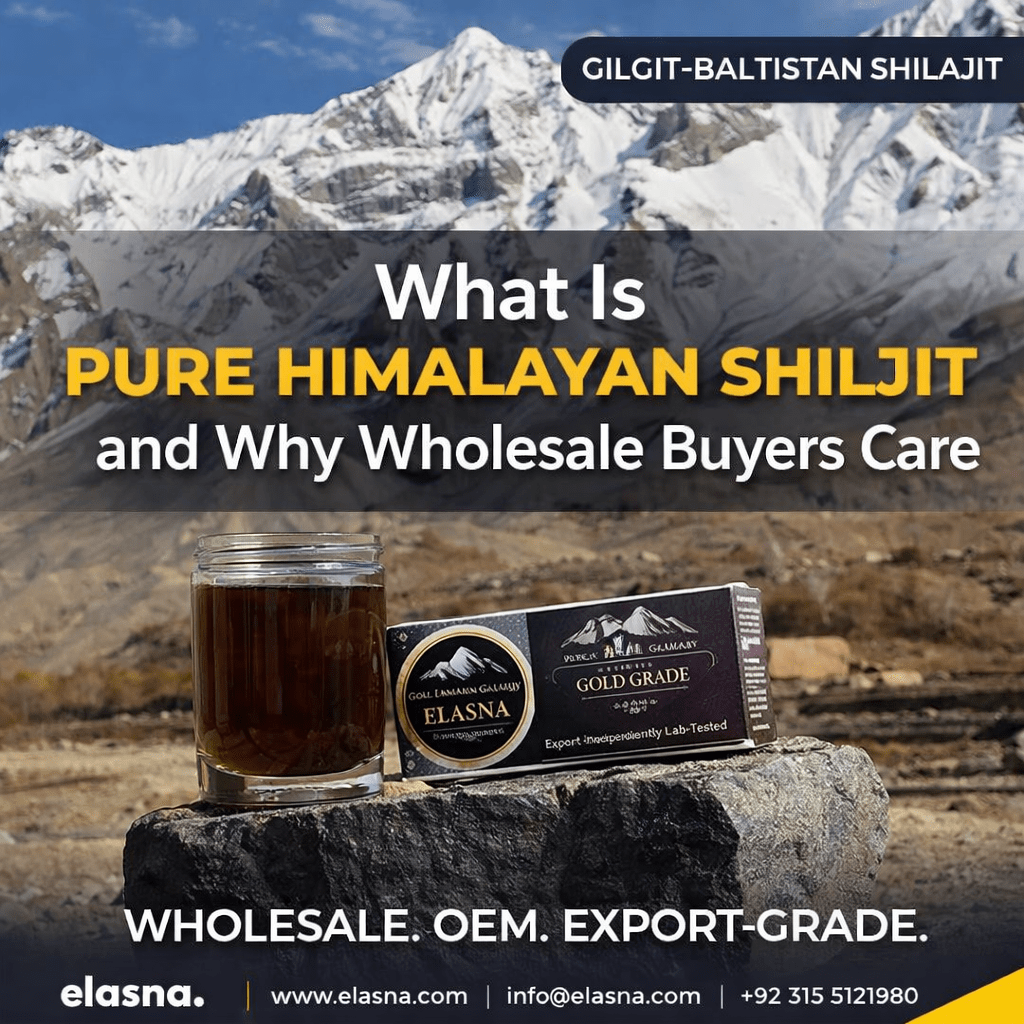
What Is Pure Himalayan Shilajit and Why Wholesale Buyers Care
Introduction: What Shilajit Is and Why Buyers Focus on Purity & Origin
Shilajit is a naturally occurring, mineral-rich substance formed over centuries through the gradual decomposition of ancient plant matter compressed between layers of rock in high-altitude mountain regions. As global awareness of Shilajit has grown, so has demand from consumers, supplement brands, importers, and private-label businesses.
However, increased demand has also brought market confusion. Today, wholesale buyers are no longer asking only “Is this Shilajit?” — they are asking where it comes from, how it is processed, whether it is lab tested, and whether it is suitable for international markets.
This shift is why Pure Himalayan Shilajit sourced from Gilgit-Baltistan is considered premium. Origin, purification, consistency, and documentation now matter more than ever, especially for B2B buyers operating in regulated or competitive markets.
What Is Shilajit? Science, History, and Modern Understanding
Shilajit forms naturally when ancient vegetation trapped between mountain rocks undergoes long-term biological transformation under extreme pressure and temperature variation. Over hundreds to thousands of years, this organic matter turns into a resin-like substance rich in naturally occurring minerals and organic compounds.
Historically, Shilajit has been collected from Himalayan rock faces during warmer seasons, when it softens and becomes visible on exposed surfaces. Traditional use emphasized careful collection and slow natural processing — principles that remain relevant for export-grade quality today.
In modern markets, Shilajit is no longer limited to traditional resin form. It is now offered globally in multiple formats such as drops, capsules, gummies, and honey blends, making standardization and quality control essential for wholesale buyers.
Why Wholesale Buyers Must Separate Myth from Reality
The Shilajit market contains both authentic suppliers and low-grade imitations. Many buyers encounter products that look similar but differ significantly in quality.
Common myths include:
- Dark color automatically means purity
- Faster processing improves efficiency without quality loss
- Low prices indicate direct sourcing
In reality, true Shilajit quality depends on origin, altitude, purification method, and verification. Buyers who fail to evaluate these factors risk regulatory issues, customer dissatisfaction, and brand damage.
Why Quality and Purification Are Critical for Export-Grade Shilajit
Raw Shilajit in its natural state may contain environmental impurities such as heavy metals or unwanted residues. For this reason, purification is a mandatory step for international trade, not an optional enhancement.
High-quality purification ensures:
- Safety for end users
- Consistency across batches
- Compliance with international import standards
Wholesale buyers and OEM brands must work with suppliers who follow structured, repeatable purification protocols rather than shortcut methods.
Why Gilgit-Baltistan Shilajit Is Considered Superior
Unique Himalayan & Karakoram Geology
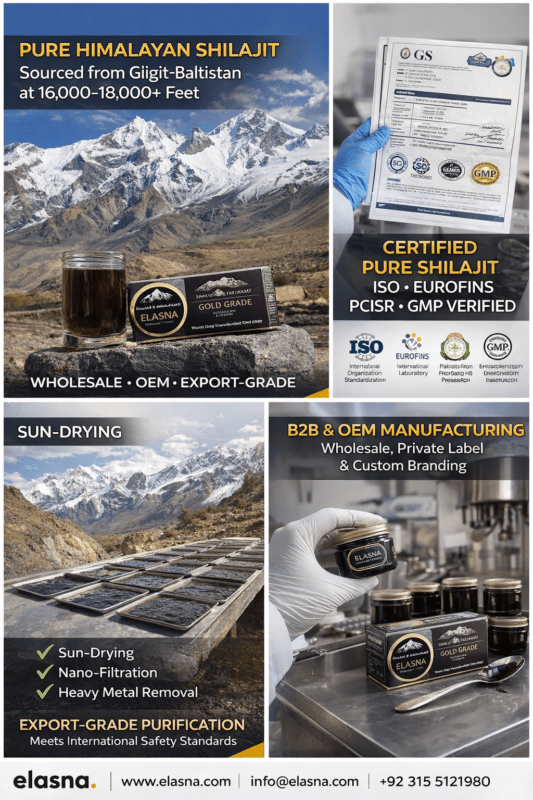
Gilgit-Baltistan lies at the intersection of the Himalayan and Karakoram mountain ranges, two of the most mineral-dense geological systems in the world. Shilajit sourced from this region forms at extreme altitudes of 16,000–18,000+ feet, far above industrial zones.
These conditions contribute to:
- Lower environmental contamination
- Higher mineral complexity
- Slower, natural formation cycles
Natural Formation Over Centuries
Authentic Gilgit-Baltistan Shilajit forms gradually over centuries, making it inherently limited in supply. This natural scarcity is why serious wholesale buyers prioritize long-term sourcing partnerships rather than spot-market purchases.
Comparison With Low-Grade or Artificial Shilajit
| Feature | Pure Himalayan Shilajit | Low-Grade Alternatives |
|---|---|---|
| Origin | High-altitude Himalayas | Unknown or low altitude |
| Processing | Sun-dried & purified | Boiled or chemically treated |
| Testing | Independent lab verified | Often undocumented |
| Batch consistency | High | Inconsistent |
Elasna Himalayan Shilajit: Purification & Certification Standards
Elasna Himalayan Shilajit follows a structured, export-oriented process designed for B2B buyers and international markets.
Traditional Sun-Drying
Instead of boiling or high-heat processing, Elasna uses controlled sun-drying, a low-temperature method that helps maintain the natural structure of minerals and organic compounds while reducing moisture content gradually.
Nano-Filtration
Advanced nano-filtration is applied to enhance purity and consistency by removing micro-level impurities without stripping beneficial components. This step supports uniform quality across batches, a key requirement for wholesale and OEM buyers.
Heavy Metal Removal
Each batch undergoes purification designed to meet international safety thresholds. This process is critical for buyers supplying pharmacies, supplement brands, or regulated retail channels.
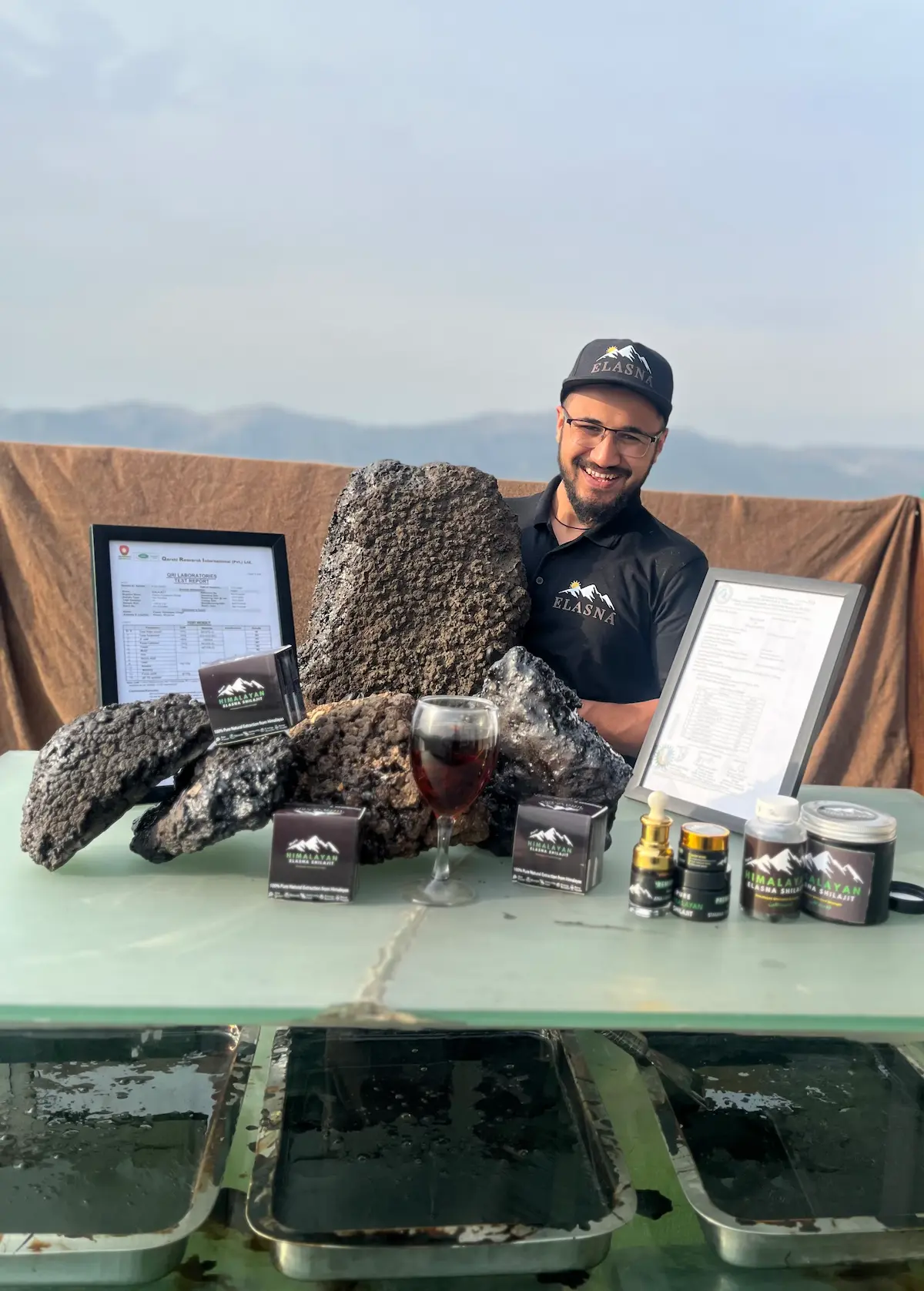
Laboratory Testing & Certifications
Elasna Himalayan Shilajit is supported by:
- ISO Certification
- PCSIR Certification
- EUROFINS laboratory testing
- GMP-aligned processing standards
These certifications provide confidence to importers, distributors, and white-label partners.
Product Formats and Real-World Applications
Shilajit Resin
Preferred by traditional users and premium brands seeking high-potency formats. Resin is commonly used by experienced consumers and niche wellness markets.
Shilajit Drops
Designed for convenience and fast absorption, making them suitable for modern wellness brands and e-commerce platforms.
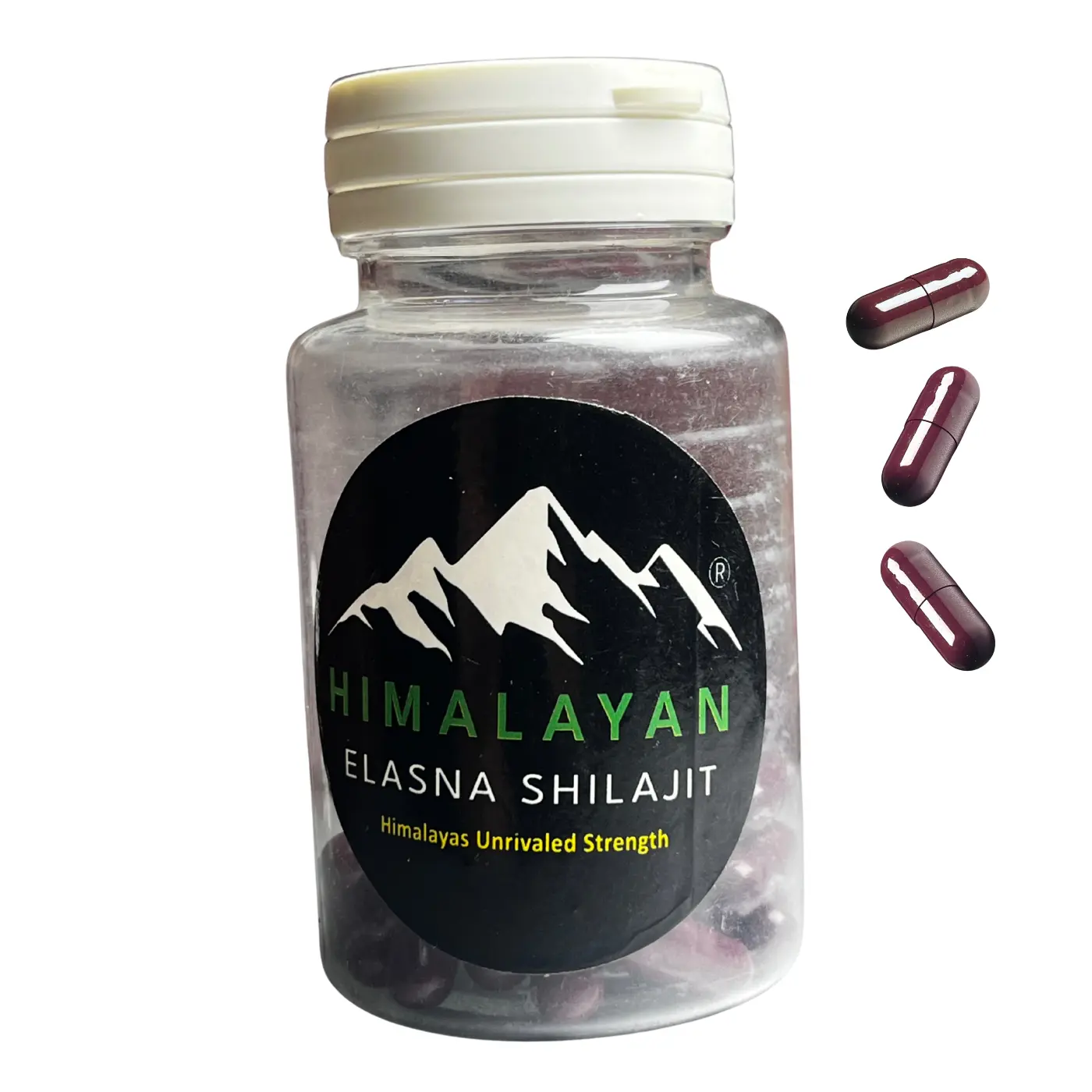
Shilajit Capsules
A standardized option ideal for daily wellness routines and mass retail distribution.
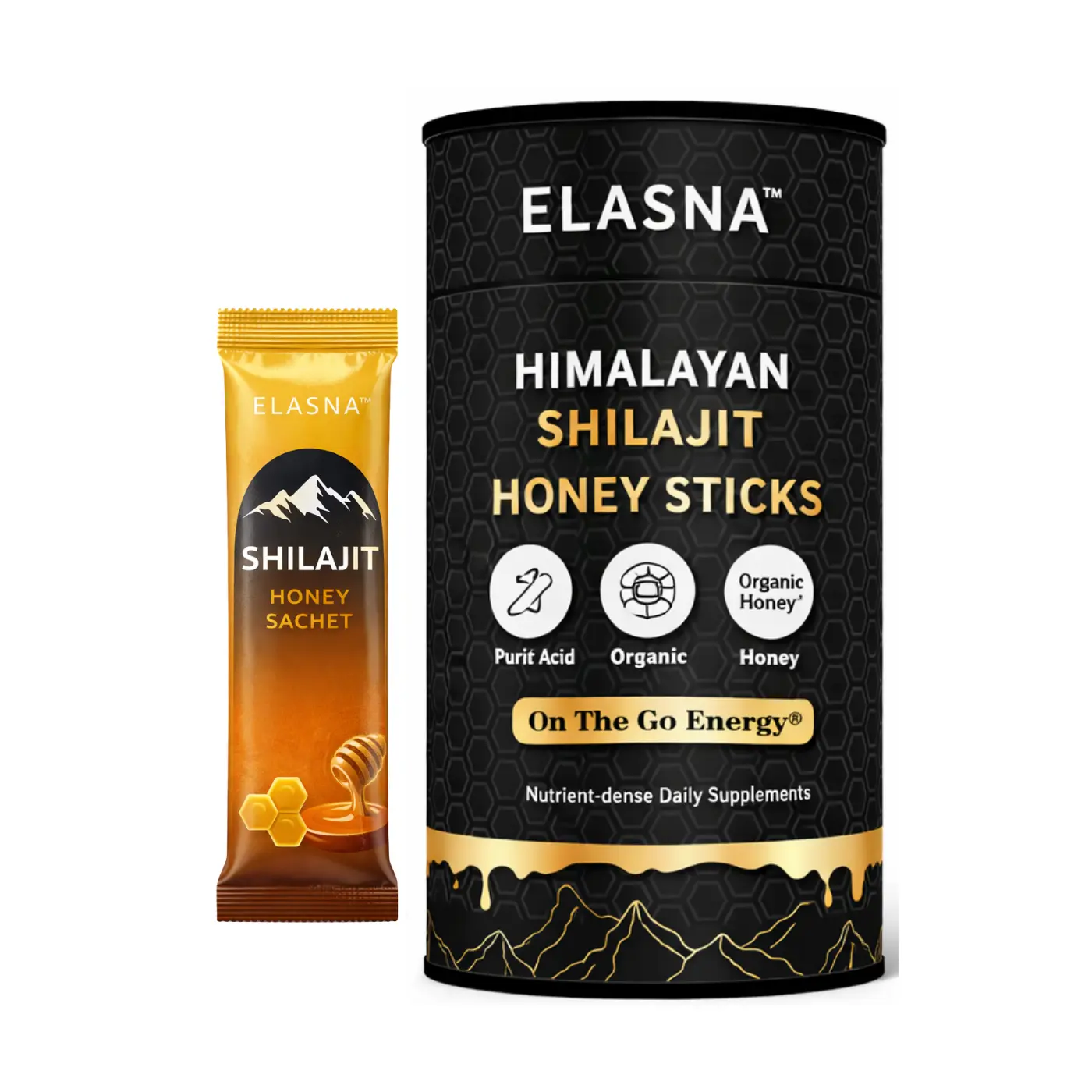
Honey Shilajit Sachets
Taste-friendly and travel-ready, popular for energy-focused retail channels.
Shilajit Gummies
A modern format appealing to younger audiences and lifestyle-focused brands seeking innovation.
B2B, OEM, ODM, and White Label Opportunities
Elasna Himalayan Shilajit serves:
- Wholesale Shilajit buyers
- OEM Shilajit manufacturers
- White-label and private-label brands
Services Include:
- B2B & B2C supply
- OEM/ODM manufacturing
- Custom branding & packaging
- Low MOQ, suitable for startups and scaling brands
- DDP worldwide shipping
- Competitive B2B wholesale pricing
Brand Motto: High Quality, Low Price
Why Wholesale Buyers Choose Elasna Himalayan Shilajit
Wholesale buyers and brands partner with Elasna because of:
- Direct sourcing from Gilgit-Baltistan
- 6+ years of industry experience
- Supply to 15+ countries
- Transparent certifications
- Consistent, export-grade quality
- Long-term partnership mindset
Elasna is positioned as a Wholesale Shilajit Supplier, OEM Shilajit Manufacturer, and White Label Shilajit partner, not a short-term trading intermediary.
Frequently Asked Questions (FAQ)
Is Elasna Himalayan Shilajit safe for international markets?
Yes. Each batch is purified and lab tested to meet international safety and quality standards.
Is Elasna Shilajit lab tested?
Yes. Independent laboratories including EUROFINS are used for quality verification.
Do you ship Shilajit worldwide?
Yes. DDP worldwide shipping is available for B2B orders.
What is the minimum order quantity for OEM or white label?
Low MOQ options are available depending on product format and packaging requirements.
How can buyers identify real Shilajit?
Authentic Shilajit is traceable to origin, purified, lab tested, and consistent across batches.
Final Conversion-Focused Call to Action
If you are looking to buy authentic Pure Himalayan Shilajit, source Gold Grade Shilajit in bulk, or launch your own OEM or white-label Shilajit brand, work with a supplier trusted by global buyers.
🌐 Website: https://www.elasna.com
📧 Email: info@elasna.com
📱 WhatsApp: +92 315 5121980
Elasna Himalayan Shilajit — Direct Source. Verified Quality. Global Supply


Add comment